Following a site visit of the Kirkgate Market in Leeds earlier this summer, where Kaajal Modi guided the Three Fields UK team throughout the stalls and the alleys of the indoor and outdoor Victorian market, in November the artist embarked on a four-week residency at the market.
Accompanied by the first frost of the year, Kaajal had access to a stall, where they brought into action some of the conversations they had been sharing with Deepa Reddy and Samukelisiwe Dube as part of their remote translocal collaboration.
.jpg)
Kaajal used this opportunity to deepen the dialogue with some of the food traders in the market - particularly those selling herbs and spices - as part of their ongoing interest in the relationship between people, knowledge, and ingredients, and the histories of migration, movement and exchange that they reveal.
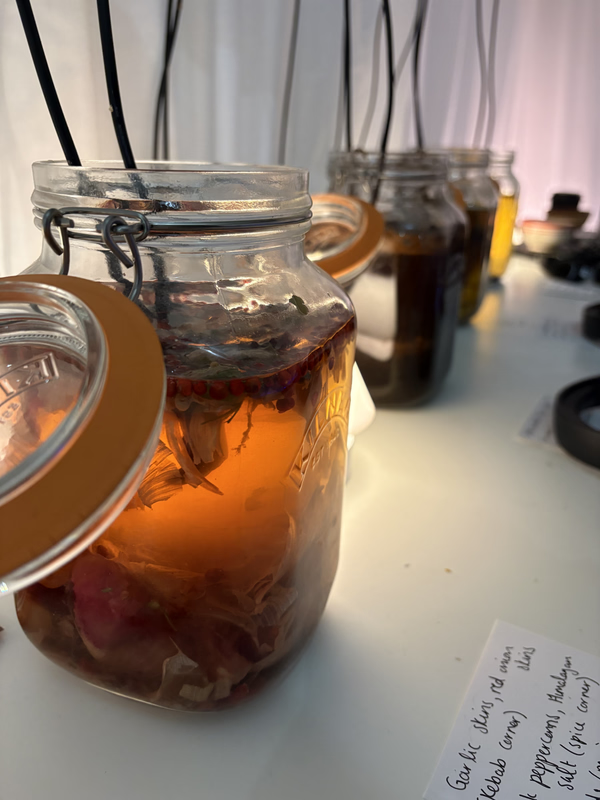
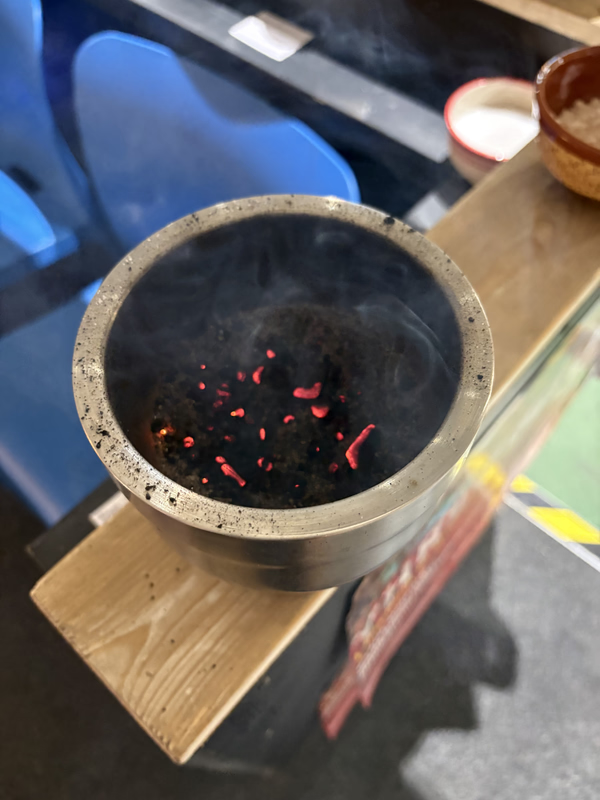
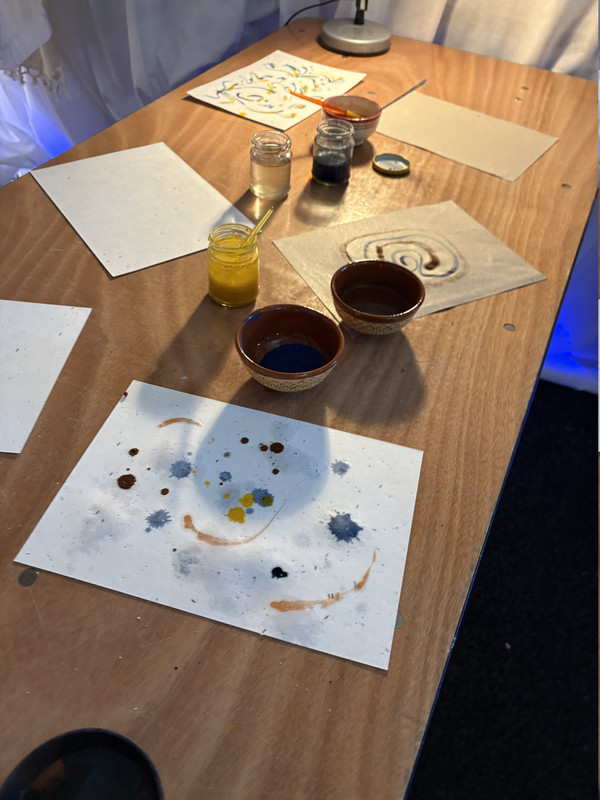
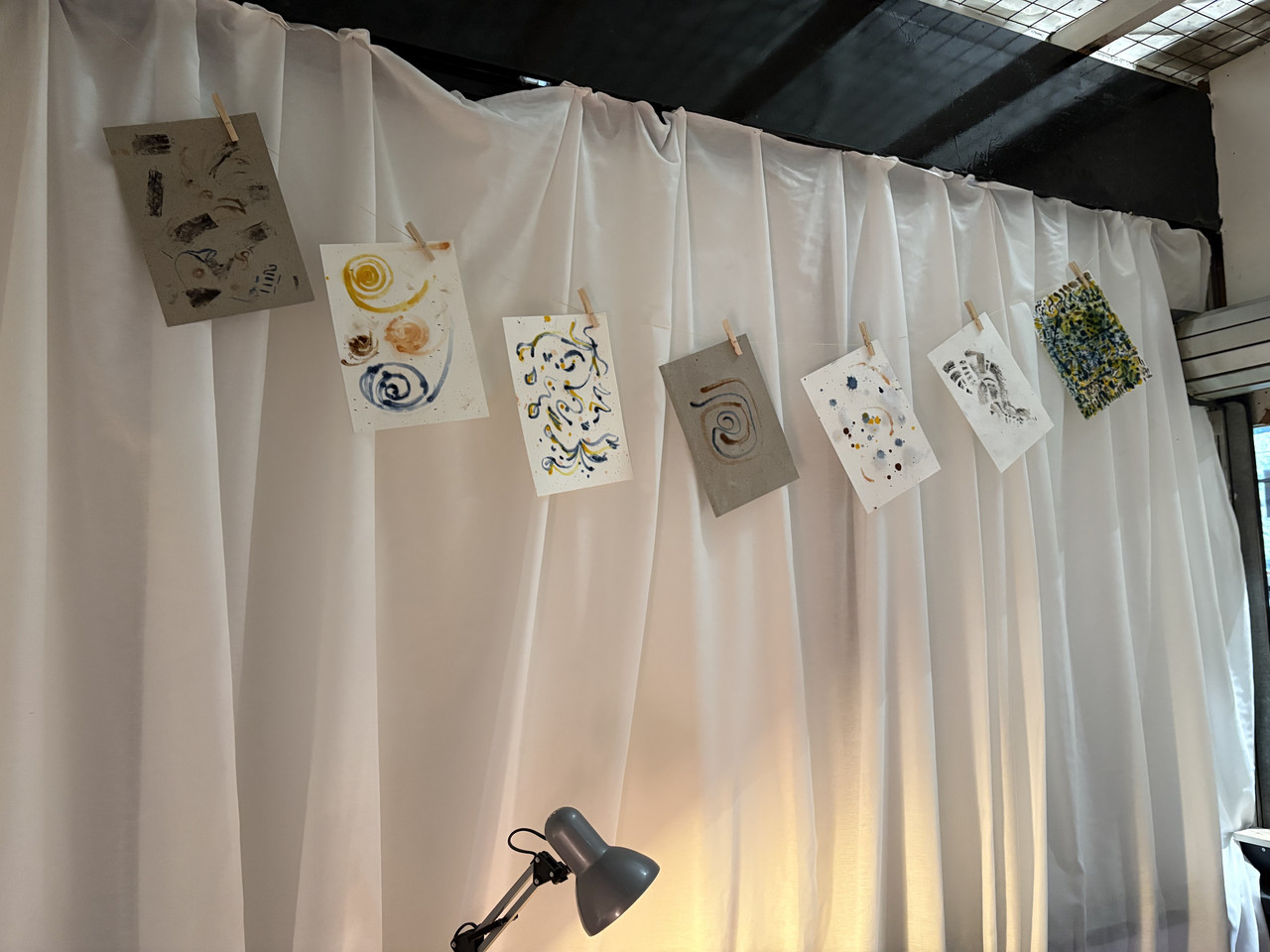
As part of the residency Kaajal led two workshops around fermenting, listening, and dyeing. They experimented with mixing spices - for instance preparing kala namak / black salt from cinnamon pepper and salt - while engaging people on a sensory journey into plants and their multiple lives made of sounds, smells and warmth.
.avif)
The ecologies of Kirkgate Market materialise UK food culture, the sinews of food trade, production, preparation and sale that have global reach. It is UK food culture in microcosm; the way we eat here has shaped and continues to reshape the landscapes and geographies of places in the majority world (including India and South Africa). Samu, Deepa and I wanted to find a way to triangulate this relationship and render it tangible / sense-able to our audiences, and each of us found ways to do this in our own fields.
My residency at Kirkgate was intended to bring together the sounds of interconnected food-people ecologies. Kirkgate and other markets like it are some of the only places where the legacy of Empire and its impact on ecologies of places we don’t see or include in our food imaginaries are in some small way still visible. UK food is the food of other places, and the people who brought these foods with them. I wanted to include the sounds of the places, and the ingredients, and the people as a gesture towards that. These spice fields and salt roads laid the infrastructures for the rare earths and the minerals we now consume with through and alongside the foods (that I use now as I write these words and record these stories, that you use to read them and listen to them).
We are here because you were there, and we continue to come here because the legacy of you being there is a harm vaster than you can imagine, that continues to displace a more-than-human us. And where we go, we bring our food. Initially for our communities, as a way to connect us to the geography and culture and memory landscapes and communities we have to leave behind, and to each other. And then for you.
The ‘spice’ I chose to listen to was salt. Prosaic, mundane, ordinary, magical, profound, necessary, sacred salt.
Deepa describes the work we are doing as drawing attention to the sounds that are otherwise too subtle to hear. I would go one step further and say we are drawing attention to places where there are no sounds: the gaps, the silences, the places where there should be a chorus and instead there is simply an absence. What can we imagine lives (and dies) there? Some organisms make no sound, yet are sonified through deliberate acts of technologisation that elide their own omissions, rendering soundscape ecologies that are beautiful, complete and painfully anthropophonic. Instead I wondered if in time these ingredients could cultivate their own sonic landscapes, that I might be able to hear, and invite others to listen to. Yet the microbes refuse, due to weather, and a sadly lifeless environment that I seek to seed over my weeks of residing in and inviting others to visit.
Yet aren’t the subsonic, subtle alterities where our mediating technologies cannot capture the polyphonic assemblages that comprise the stuff of life important? The breaks, glitches and dissonances themselves resonant of who (and what) we leave out when we tell stories, in whatever form they take (recipes, songs, an immersive soundscape created via a collaboration between three artists in vastly different landscapes). The real work lives in these gaps, in the absences and silences where words cannot convey the injustices and the harm, the whole and entire deeply entangled webs of unimaginable worlds that we begin to tap into when we listen. As we begin to build a situated practice of listening, of tuning into, through partial plural perspectives from the human (and other-than-human). It is not by any means a complete story, but a small part is revealed in a way that invites you, the listener, in, and leaves gaps for your own salty story, your sweat and tears and saliva, your body.
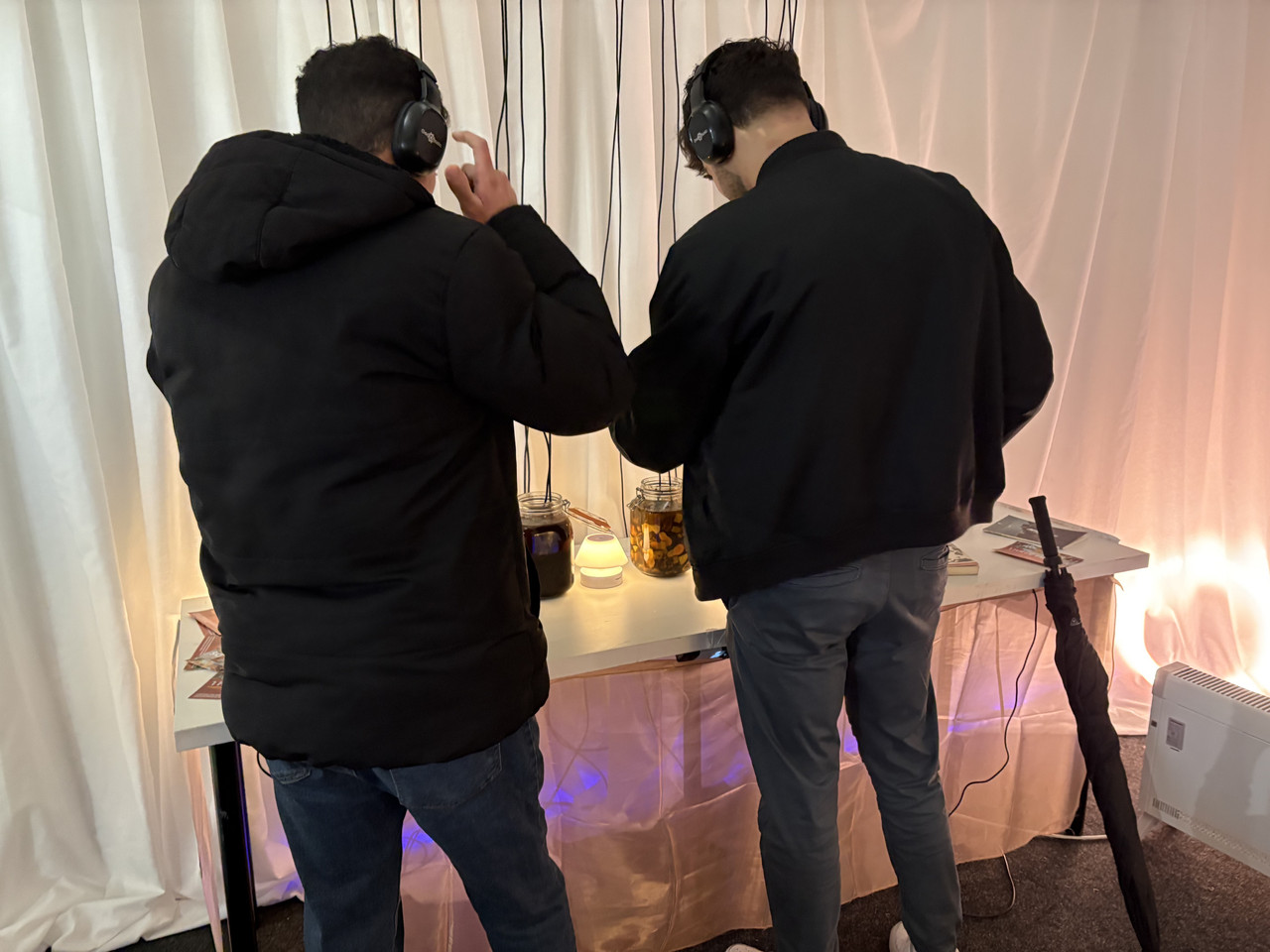
The ingredients I put into the jars were sourced from the market: dug from bins, found, bought, gifted. Food waste and skins and spices and salt from different sources. There are stories attached to each of these, but I only managed to record some of them. Others I made part of me, ingesting them in ways that will only emerge in the weeks and months and years to come. In the jars, under the water, the hydrophones listen for bacteria respiring anaerobically, and my salts control for yeasts and molds. The wires are prosthetics I use to extend my body, my ears rubberised microphones that listen but not as I listen. I wear my binaural headphones as I burn salt and pepper and cinnamon, sprinkling it into my jars and invoking my sisters-ancestors-silicone-spirits to bless me with lively encounters and bright colours. These micro-ecologies that I encounter through their absences, the heirloom technologies of a recipe-ritual that I adapt to survive in this new place. Burning and tasting and listening to the black salt ash, a medicine I return back to the earth and the water as I pray for seeds to grow into sacred groves, and listen to the places where they do not.