

As part of our guiding principles of THREE FIELDS, we attempted to create a working process and digital artwork that did as little environmental harm as possible. Fast Familiar’s Dan Barnard shares some of the key takeaways and the major challenges around sustainability that we faced as part of this year-long translocal project.
THREE FIELDS was a collaboration across India, South Africa, and the UK to explore environmentally conscious creative digital practices. The project was a partnership between Quicksand/Unbox (India), Fak’ugesi (South Africa), Abandon Normal Devices (UK), Arts Catalyst (UK) and my own organisation, Fast Familiar (UK) and supported by the British Council. It grew out of some earlier work that Fast Familiar, Abandon Normal Devices and Arts Catalyst did as part of a project called The Networked Condition, exploring the environmental impacts of digital cultural production and resulted in a series of case studies, a project planning tool and a shift in the working practices of all three organisations involved.
The idea behind THREE FIELDS was to build on this learning by supporting three artists to collaboratively develop a prototype artwork that reimagines our relationship with food systems in the context of climate change, whilst working in a way that is environmentally sustainable. The three artists selected for the project were Samukelisiwe Dube (South Africa), Deepa Reddy (India) and Kaajal Modi (UK).
Below are some of the key things that we did to work in a way that minimised environmental harm:
We collaborated entirely online
The classic model of British Council-funded international collaborations is for artists from different countries to fly to visit each other and spend time sharing knowledge and collaborating together. This is wonderful on so many levels, but it does come with a hefty carbon cost. For example, if Deepa and Kaajal had flown to Johannesburg to collaborate with Samu, the flights alone would have resulted in 2.3 tonnes of carbon dioxide emissions. With this project, we explored how three artists could collaborate entirely online to create a single artwork.
It was challenging to create the same kind of bonding online that one can do in person but we explored a range of ways of doing this, including cooking rice together, checking in about where we were at, bringing embodiment into our conversations, doing and sharing artistic homework tasks and talking a LOT about food, food justice and climate, which we were all passionate about. The artists met in sessions facilitated by Fast Familiar and in independent sessions with just the three of them and also formed a group chat where they shared a great many links, thoughts and feelings. The project also sought to bring the hyperlocal and the global together, so we all did a great deal of sharing and learning about our local contexts.
We avoided AI
We were doing this project around the time of peak AI fever: everyone everywhere seemed to be talking about it all the time and playing with it. We took a different approach and decided to completely avoid using it in the project. In an early session where I shared some of the knowledge from The Networked Condition project, we discussed some of the environmental harm that the current AI craze was doing. We learned that, for example, on average, a ChatGPT query needs nearly 10 times as much electricity to process as a Google search and that Open Al’s GPT-3 algorithm was estimated to emit more than 500 metric tons of carbon dioxide during training. In addition, we learned that OpenAI’s ChatGPT consumes 500 ml of water for every 5 to 50 prompts it answers. This is because data centres generate heat and use cooling towers to dissipate heat. Meanwhile 1.1 billion people worldwide lack access to water, and a total of 2.7 billion find water scarce for at least one month of the year. It is predicted that by 2030, almost half of the world’s population will be facing severe water stress. As Antonio Gutierres, UN Secretary General put it, “Water is a human right and the common development denominator to shape a better future. But water is in deep trouble.” As well as something we drink, water is obviously something that we need in order to grow food and it seemed crazy to us to be working on a project about food justice while simultaneously wasting water.
There are obviously much more ethical uses of machine learning that some digital artists are using, building their own models using much smaller codebases and datasets and hosting their work on servers powered by renewable energy. I’m not advocating for digital artists to completely avoid machine learning but as the artists didn’t have the specialised skills to build their own models, we decided to avoid it altogether.
We worked as much as possible with existing hardware to avoid buying new equipment
Some of the funding and “innovation” narratives around digital and immersive art mean that there can be a real interest in using the latest kit and exploring its artistic possibilities. Making new kit uses a lot of energy and also has other forms of environmental damage associated with mining. For this reason Fast Familiar always try to use slightly older hardware that either we already have or buy refurbished. For this project, instead of buying new binaural microphones we borrowed them from other arts organisations and artists.
We worked with immersive sound rather than video/VR/AR.
The project started with lots of research into the key themes, different artistic and environmental approaches and then part way through the project we decided what form of immersive/digital arts we wanted to focus our work on. The artists chose to focus on using immersive sound, partly because they knew that the environmental impact of storing and streaming audio files is considerably smaller than storing and streaming any form of video and particularly VR or 360 video. Streaming conventional video produces around 55g of CO2e per hour compared to streaming audio which is estimated at around 1.05g of CO2e per hour.
In addition to this influencing the artwork we made, it also guided the way that we decided to document it. Instead of making video documentation, as we had originally planned, we instead created two podcast episodes.
We made a low carbon website
Websites differ significantly in their carbon footprint. In our attempt to ensure that all elements of the project embraced digital sustainability, we built a low carbon website to document the project. We did this by using a prototype site builder that Fast Familiar had built as part of a previous project. This site builder allows people without significant coding experience to build static websites which have a significantly lower carbon footprint than dynamic sites. The website is hosted on Microsoft Azure, which has strong environmental commitments.
We tried to slow down
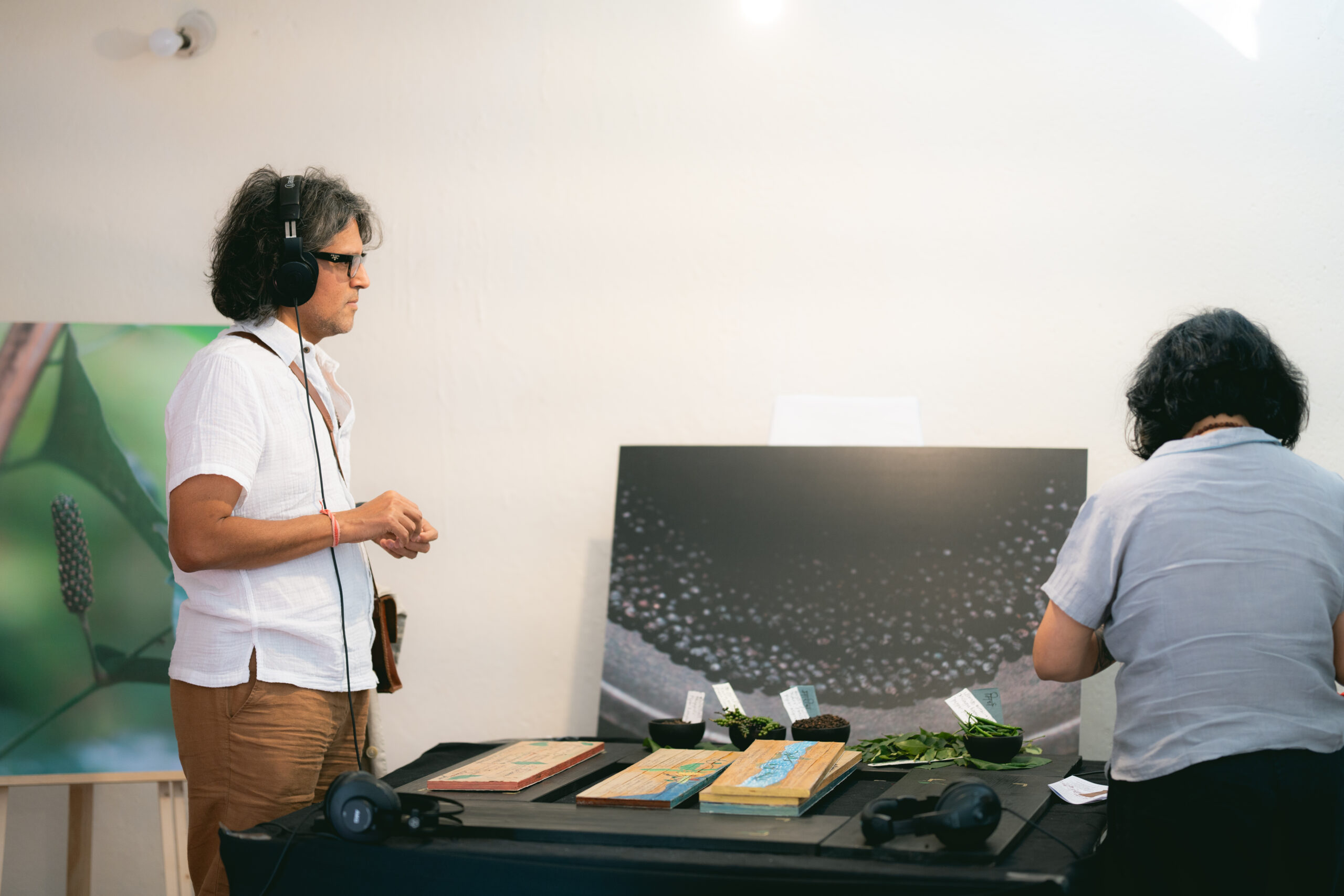
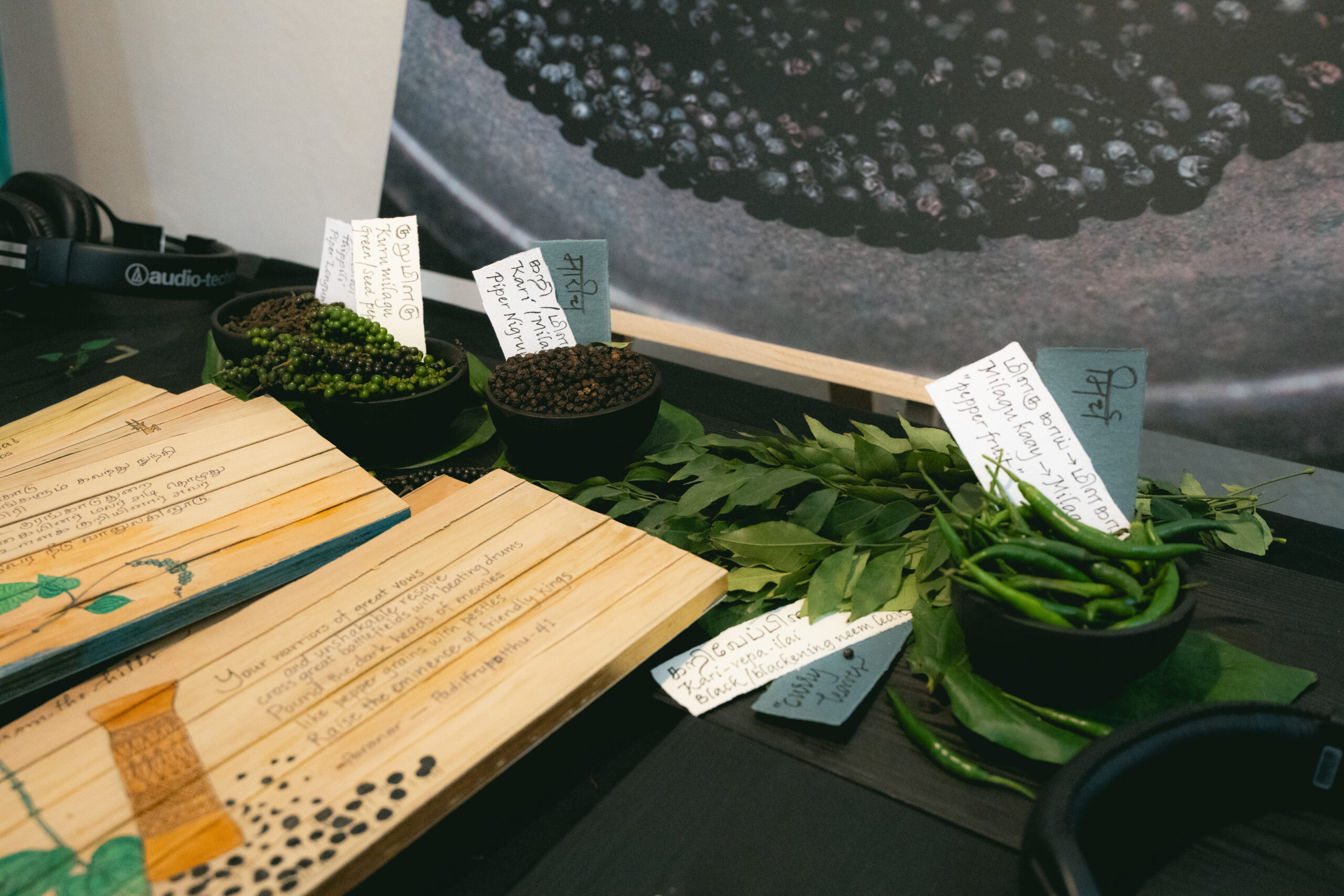
Working in a way that does less damage to the environment can mean that you need to slow down. Systems generally are designed to maximise profit rather than help the planet, so to do something in ways that are kinder to the environment can involve going against the grain and necessitate taking more time and care. The low carbon website, for example, was slower than building a site in a slick drag and drop interface like Squarespace. A physical book at the heart of the artwork that Deepa Reddy shared at EyeMyth was an interactive book handmade from plants, which included collecting and drying toddy palm fronds, making inks from burnt pepper, and etching on to the pages before wiring them up with electronic triggers for the soundscapes.
We also encountered some significant challenges.
Challenges of infrastructure
Before starting this project I hadn’t fully appreciated the impact that infrastructure in each different country would have on the project. In the UK, for example, you can choose a more sustainable energy supplier that invests in building new wind turbines or solar farms. The electricity that you actually use while charging your laptop for an online meeting or to work on an artwork still comes from the national grid, but the money you pay for it can contribute to changing the national energy mix. India is currently developing a model where consumers can choose their energy supplier, but this system is not yet in place. The majority of energy in India comes from coal, although an increasing proportion of it is coming from renewable energy. South Africa similarly gets the majority of its energy from coal with around 17% coming from renewable sources and is now moving into a system where consumers can choose their energy supplier. South Africa is still subject to frequent power cuts, which meant we were always aware that there might be weeks when Samu would be unable to join us, although mercifully that never happened.
Spending a lot of time in online meetings also made us keenly aware of the differences in Broadband quality between different people. The UK connections (all in cities, admittedly) were really strong, whereas Samu’s connection in Johannesburg meant she often needed to turn off her video in order to avoid dropping out of the call.
Challenges of geography and time
In the planning phases of the project, I made the basic error of just not realising how big India is. Avinash Kumar from the Quicksand is based in Goa, Deepa one of the THREE FIELDS artists is based in Pondicherry and EyeMyth, where the artwork was presented, is in Delhi. As a British person, I intuitively assume that it is relatively easy to get everywhere in my own country by train. However, there came a point where I realised that if Deepa were to get the train to EyeMyth festival, the journey would be 38 hours long and 31 hours for Avinash. By contrast, in the UK, which is geographically much smaller, it only takes 14 hours to get from Land’s End to Inverness, or from one end of the country to the other. So both Deepa and Avinash ended up flying to EyeMyth, which could perhaps have been avoided if we had designed the project differently.
At the points in the project when we succeeded in slowing down, it was easier to make sustainable choices. In the run up to the exhibition for example, we ended up having to buy some new things using delivery services. It is also always easier to make better choices in your home town where you know more about how and where to source things locally.
When working on digital projects and trying to minimise environmental harm, try to minimise flying, make maximum use of hardware you already have, be cautious in your use of AI, consider building websites in sustainable ways and bear in mind the different impacts of streaming video and audio. All of these things get easier when you give yourself permission to slow down. There are, of course, many things that are out of individual people’s control, such as infrastructure and geography. There were lots of things we didn’t know the answers to at the start of the project and we had fun experimenting and finding out on the way. Most of all, celebrate small wins and don’t let the perfect be the enemy of the good - working in a zero carbon way is almost impossible, but reducing our harmful impact can enrich both the process and the artwork that results.
Listen to our latest podcast episodes on exploring digital practices and food through the lens of its movement, migration and distribution.